How to stay on the right side of the tracks
In 2025, there were 2,266 collisions at railroad crossings in the U.S. According to preliminary data from the Federal Railroad Administration, these incidents resulted in 288 deaths and 754 injuries.
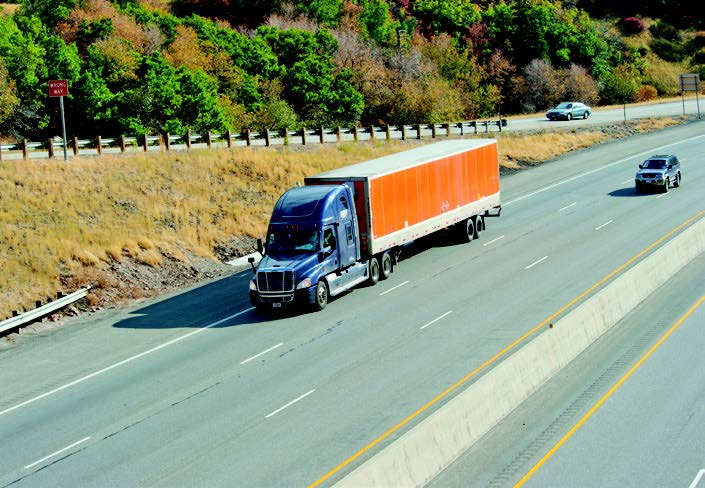
With more than 200,000 highway-rail grade crossings located across the U.S., it’s critical that all professional drivers know how to legally and safely cross railroad tracks.
TIP: Distribute and review the applicable requirements in Part 392 with your drivers. Stress the importance of compliance.
Get on board with the regulations
Highway-rail grade crossing regulations for commercial motor vehicles (CMVs) are addressed in Part 392 of the Federal Motor Carrier Safety Regulations (FMCSRs).
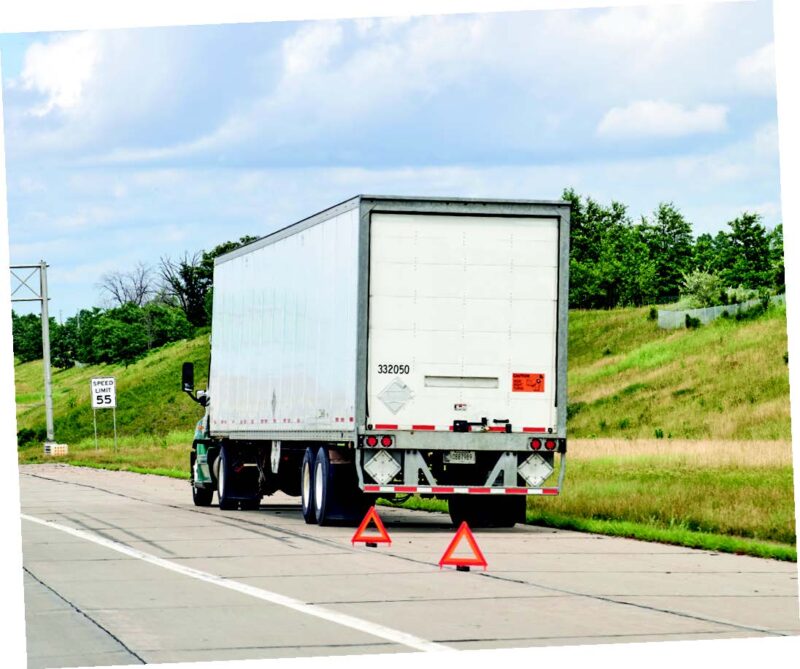
Section 392.10 requires that certain types of CMVs stop within 50 feet of the railroad tracks and no closer than 15 feet to the railroad tracks. CMVs that must stop include:
• Buses transporting passengers;
• CMVs transporting any quantity of a Division 2.3 chlorine;
• Certain classifications of CMVs which are required to be marked or placarded (see 392.10);
• Cargo tank motor vehicles, whether loaded or empty, used for the transportation of any hazardous material;
and
• Cargo tank CMVs transporting commodities under specific circumstances (see 392.10).
When at a railroad crossing, the driver must listen and look in each direction along the tracks to make certain a train isn’t approaching. Drivers must not shift gears when crossing the tracks.
There are also certain instances when stopping at railroad tracks isn’t required. These include:
• At abandoned crossings which are marked with a sign as abandoned, or
• At an industrial or spur line railroad grade crossing marked with a sign reading “exempt.”
If the CMV isn’t required to stop, 392.11 of the FMCSRs requires that the CMV travel at a rate of speed that’s slow
enough to stop before reaching the tracks.
A CMV may not cross the tracks until the driver is certain the crossing is clear.
Finally, 392.12 of the FMCSRs states that drivers of CMVs must ensure they have sufficient space to drive completely through a highway-rail grade crossing without stopping.
TIP: Make sure your drivers understand the serious nature of this issue by distributing any policies your company may have.
Signaling safety
There are two basic types of warning devices at railroad crossings: passive and active. Passive warning devices are not electronic. Passive devices are intended to direct the driver’s attention to
the crossing. These devices include advance warning, crossbuck, stop, and yield signs.
• An advance warning sign:
- Warns that the road crosses railroad tracks ahead.
– Reminds the driver to slow down.
– Prepares the driver to stop if needed.
• A crossbuck sign:
– Is located on the right side of the road before the train tracks.
– Marks the crossing.
– Serves as a yield sign.
• A low clearance sign:
– Indicates low ground clearance.
– Warns of potential problems for vehicles with a low undercarriage.
• A parallel tracks sign:
– Warns drivers of highway-rail grade crossings that appear immediately after making a left or right turn.
– Active warning devices activate automatically when a train approaches a highway-rail grade crossing. They include:
• Gates,
• Bells,
• Lights, and
• Traffic signals.
TIP: End with a question-and-answer session to catch your drivers up on anything they may have missed.
Provided by J.J. Keller & Associates
To view the full monthly newsletter click here: Railroad Crossings – June 2026